


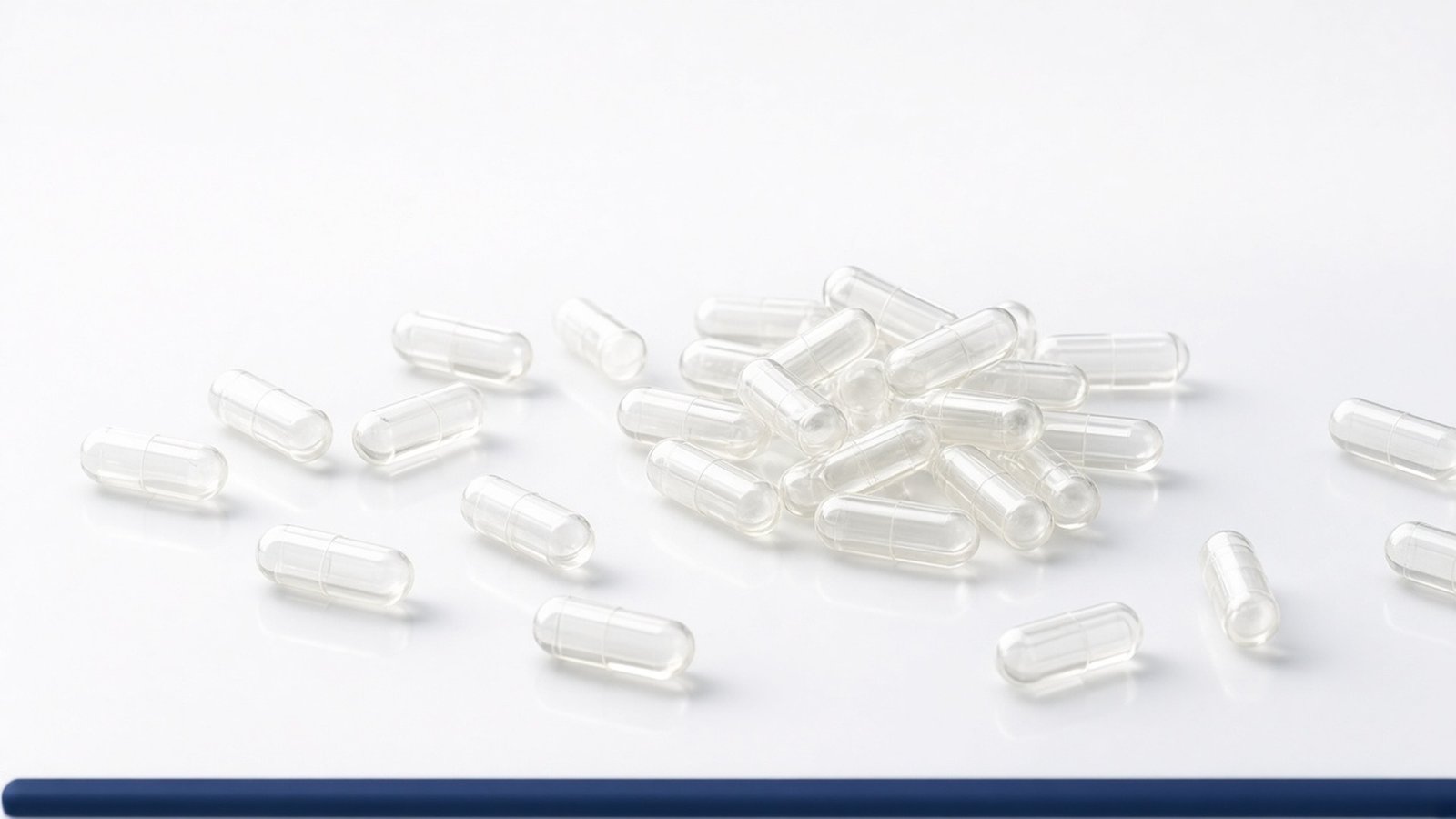
Empty capsules are one of the most common B2B packaging components for food supplements, herbs, and private-label lines. BaltCaps supplies gelatin and HPMC (vegetarian) capsules to manufacturers, labs, and pharmacies in the Baltics from an EU warehouse, with prices in EUR. Below — who buys them in practice and how to start an order: no medical claims, no invented prices, no “miracle” formulas.
What “empty capsules” means in B2B
Empty capsules are a shell for filling: two halves (cap and body) into which you or your contract filler put powders, extracts, or another dry blend. They are not a finished medicine and not a filled supplement. BaltCaps does not sell filled capsules and does not advise what to put inside — only the packaging component, size, and material.
In the catalog you will see both joined and pre-separated packs. Separated halves suit manual or semi-automatic filling machines: less time prying shells apart, faster cycles. Joined shells suit small hand fills or when that format is easier to store and ship. Both are empty capsules; only readiness for filling differs. If you plan to use a machine, check that your size is available pre-separated before ordering a larger lot.
For B2B buyers, logistics matter too: dry goods, EU stock, delivery to Lithuania, Latvia, and Estonia. That shortens lead time versus a long import when you need a trial or repeat batch quickly.
Supplement and herb manufacturers (private label / own brand)
The largest B2B audience is manufacturers and brands that fill capsules for their own formulas: vitamin and mineral blends, herb powders, extracts, clean-label export lines. Empty capsules let you keep the formula and dose in-house (or with a contract filler) while ordering the shell separately by size and material.
- Own brand / private label: one formula — several sizes or materials for market tests.
- Herb and extract lines: often #00 or #0, depending on powder density.
- Contract filling: you bring the spec, the filler brings the equipment; capsules must match the machine size.
- Growing lines: start with small packs, then wholesale cartons without changing supplier.
For Baltic private-label teams, predictable local delivery often beats “cheapest worldwide” with an unclear date. Start in the catalog; for larger or recurring volumes see wholesale.
Labs and R&D / trial batches
Labs, formulation studios, and R&D teams buy small packs to check flow, density, capsule size, and fill behaviour before a large run. Empty capsules here are a trial component, not a shelf product.
Typical path: try #00 and #0, see whether the powder fits and whether your manual filler matches, then order more. Pre-separated halves speed machine cycles; joined shells are fine for hand filling without a machine. Dimensions and indicative fill ranges are on the size chart and product pages — density varies, so “mg per capsule” always depends on your powder, not a universal rule.
At R&D it helps to keep both gelatin and HPMC on hand: you quickly see whether a vegetarian claim changes fill feel or only the label. Leave the full materials comparison to the guide linked below — here the point is a cheap, fast trial.
Pharmacies and small producers in the Baltics
Pharmacies, small packers, and local producers in Lithuania, Latvia, and Estonia buy empty capsules when they need flexible volumes and a short route from EU stock. A few thousand or tens of thousands of capsules is often enough — not every order needs a full container from afar.
BaltCaps is B2B: checkout asks for company details. If you are a small brand owner or a pharmacy filling under your own process, the catalog and a wholesale enquiry are two paths to the same warehouse. For small packs use the shop; for recurring supply or non-standard quantity, write via contact or wholesale with size, material, joined/separated, and country.
When you need vegetarian HPMC or delayed-release
Standard gelatin is the classic, often more economical choice for dry powders. HPMC (vegetarian) when the product must be plant-based / vegetarian or the market asks for it clearly. Delayed-release capsules are a separate line when you need a different release profile than a standard shell. Full comparison: gelatin vs HPMC guide — we do not repeat that article here.
How to start: size → material → catalog / wholesale
- Size. Fill weight and machine drive #00, #0, or #1. Short guide: see size notes on the size chart and product pages (LT size guide: #00 / #0 / #1).
- Material. Gelatin, HPMC, or delayed-release — by positioning and formula needs (materials guide).
- Fill-ready pack. Joined or pre-separated — depending on whether you use a filling machine.
- Order. Standard packs — shop / catalog. Larger or recurring lots — wholesale.
Machine size must match capsule size (e.g. a #0 filler needs #0 capsules). If unsure, send size, material, and an indicative quantity — we will confirm stock and delivery to LT/LV/EE.
Short takeaway
Empty capsules in B2B are a fill component for manufacturers, private label, labs, pharmacies, and small batches in the Baltics. Pick size, then material, then pack format (joined / separated) and quantity. BaltCaps: prices in EUR, EU warehouse, delivery to Lithuania, Latvia, and Estonia.
Catalog: baltcaps.eu/en/shop · Wholesale: wholesale · Questions: contact